
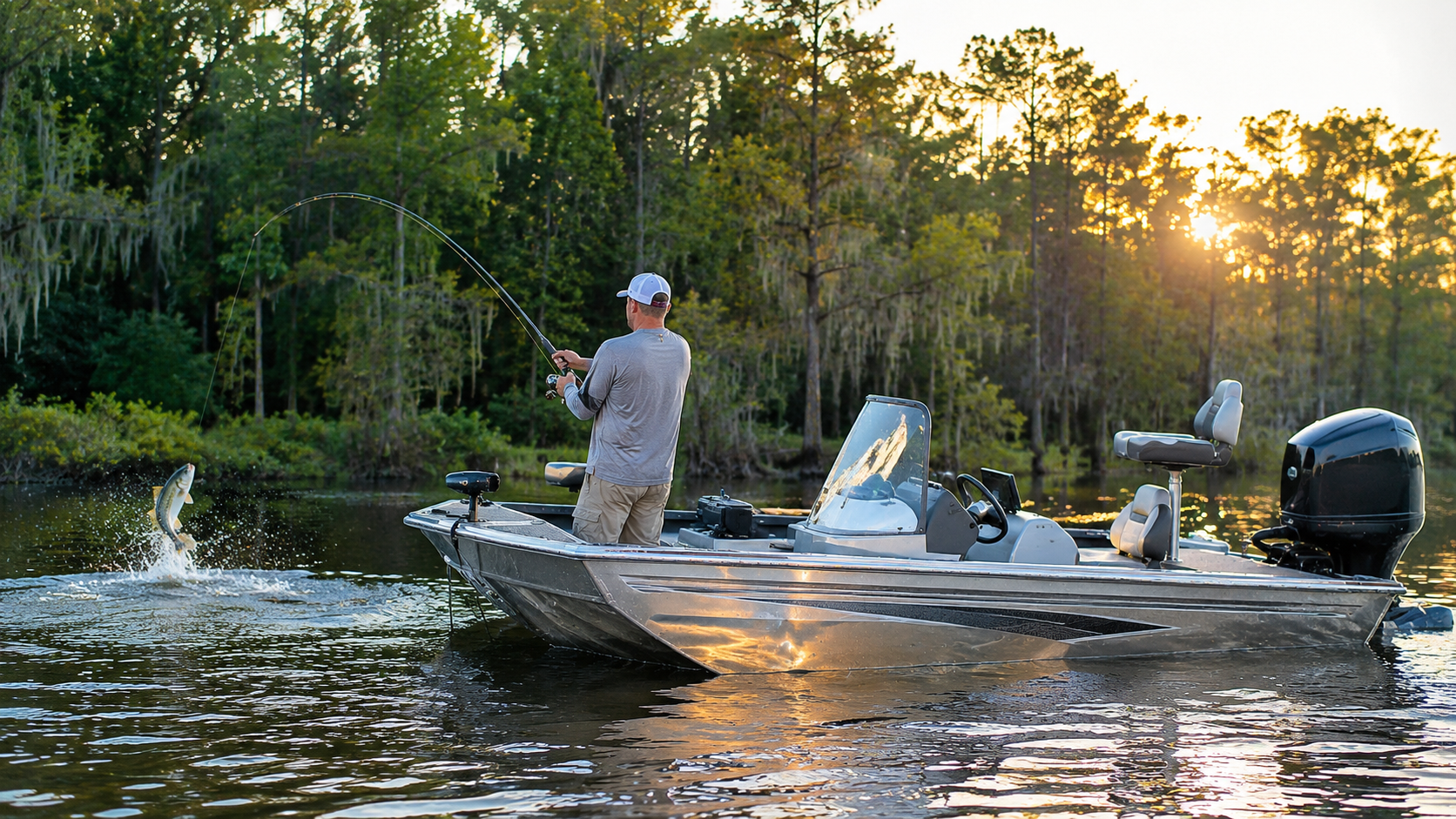
What is the best aluminum fishing boat brand?
There is no single best aluminum fishing boat brand. Tracker, Lowe, Lund, Crestliner, Alumacraft, and G3 are the names most anglers shortlist, and southern builders like SeaArk, War Eagle, and Xpress are strong picks for shallow water. The right brand depends on where you fish, how much you want to spend, and how well the hull is built. Pick a welded hull, a clear hull warranty, and a dealer near enough to service it.
Which aluminum fishing boat brands are worth considering?
Start with Tracker, Lowe, Lund, Crestliner, Alumacraft, and G3 for general fishing, and add SeaArk, War Eagle, and Xpress if you fish shallow marsh, bayous, or backwater. None of these is the best at everything, so match the brand to the water you fish.
Here is how the main names stack up:
Tracker is the most-searched aluminum brand, according to Trade Only Today's search data. It is a common first boat because it is sold as a complete package with a motor and trailer.
Lowe ranks second in that same search data and is built in Missouri, the same state as Tracker.
Lund, Crestliner, and Alumacraft are Minnesota builders that round out the top five in that data.
G3 is a regular on lists of the best aluminum boats, and Boatsetter's list includes the G3 20 GX, which it describes as a capable saltwater option.
SeaArk, War Eagle, and Xpress are Arkansas builders with roots in duck boats and jon boats. Their all-welded, shallow-draft designs suit marsh and backwater fishing, which is why they are common across the South. Their history is covered in Greenhead magazine.
Other brands worth a look include Smoker Craft, Starcraft, MirroCraft, and Princecraft, depending on what your local boat dealers carry. Popularity data tells you which brands people search for. It does not tell you which one will fit your lake, so test the specific model you are considering.
What makes an aluminum fishing boat brand a good one?
A good aluminum boat brand has a well-built hull, a written warranty you can read, and a dealer who will still answer the phone after the sale. Everything else, from livewells to electronics, can be changed later. The hull cannot.
Here is what to check, in order of importance:
Hull construction. Welded hulls join the aluminum with welded seams. Riveted hulls use fasteners, and over time rivets can loosen and leak. Arkansas builders tell Greenhead magazine that old riveted jon boats rattled, leaked, and eventually separated, which pushed the industry toward all-welded designs. Many brands now weld some or all of the hull, so check each model's spec sheet instead of assuming.
Hull shape. A flat-bottom jon boat is stable and draws little water, which suits shallow marsh and ponds. A modified-V rides better in chop. A deep-V handles rougher open water but sits deeper and needs more motor.
Hull warranty. Ask for the warranty in writing and read what it covers, who it covers, and whether it transfers if you sell. Terms change, so use the current paperwork for the exact model.
Floor, deck, and flotation. Look for a solid floor, secure seat bases, and foam flotation. Spongy floors and loose hardware are early signs of a rushed build.
Capacity and power rating. Check the boat's capacity plate for maximum horsepower and weight. A boat rigged beyond its rating is unsafe and can void coverage.
Dealer support. Pick a brand with a dealer near you. Warranty work, motor service, and trailer repairs are far easier close to home.
If you fish brackish water near the coast, aluminum needs extra care. Copper-based bottom paint can cause galvanic corrosion on aluminum, so ask the dealer which coatings are safe for your hull before you paint anything. Rinse the hull and trailer after saltwater trips.
Which aluminum fishing boat is best for how you fish?
The best boat is the one built for your water. Shallow marsh calls for a flat-bottom jon, small lakes and rivers fit a modified-V, and open water needs a deep-V.
Use this as a starting point:
Shallow marsh, timber, and backwater: A flat-bottom welded jon boat. Xpress, for example, sells its Bayou series as all-welded aluminum shallow-water boats for marsh and backwater. SeaArk and War Eagle build similar boats.
Small lakes, ponds, and rivers: A modified-V or jon boat with a tiller or small console. These are easier to tow and launch alone, but check the weight of the boat, motor, and trailer against your vehicle's tow rating.
Large reservoirs and big lakes: A deep-V or wide modified-V with a console and a higher power rating. Look at models from Lund, Crestliner, Alumacraft, Tracker, Lowe, and G3.
Coastal and brackish water: A welded deep-V or bay-style hull. Some builders, including G3 with its 20 GX, market models for saltwater use.
Fishing with kids or family: A wider, more stable hull with bench seating and a console, even if it gives up a little fishing space.
New and used boats each have a place. New boats come with a warranty and current rigging. Used aluminum boats cost less, and a clean hull can last for years, but check carefully before you buy. Look for dents along the keel, cracked welds, loose or weeping rivets, a soft transom, and corrosion where the motor mounts. Have the motor and trailer inspected as well. A cheap hull on a rusted trailer is not a bargain.
What mistakes should you avoid when buying an aluminum fishing boat?
The biggest mistakes are buying on brand name alone, overlooking the tow setup, and skipping the on-the-water test. Each one is easy to avoid with a little planning.
Choosing by popularity. A big name does not guarantee the right hull for your water. Test the specific model, not just the logo.
Ignoring the rest of the rig. The motor, trailer, trolling motor, and electronics all add to the final cost, so compare complete packages, not boat prices.
Not checking tow weight. Add the boat, motor, fuel, gear, and trailer together, and compare the total with your vehicle's tow rating. Bayou Outdoor's towing guide lets you look up a vehicle's towing capacity, though it is built for RVs and is for reference only. Always confirm figures with your owner's manual.
Overpowering the boat. Stay within the maximum horsepower on the capacity plate.
Buying more boat than you need. A deep-V is a poor choice for a small pond, and a jon boat is a poor choice for a windy reservoir.
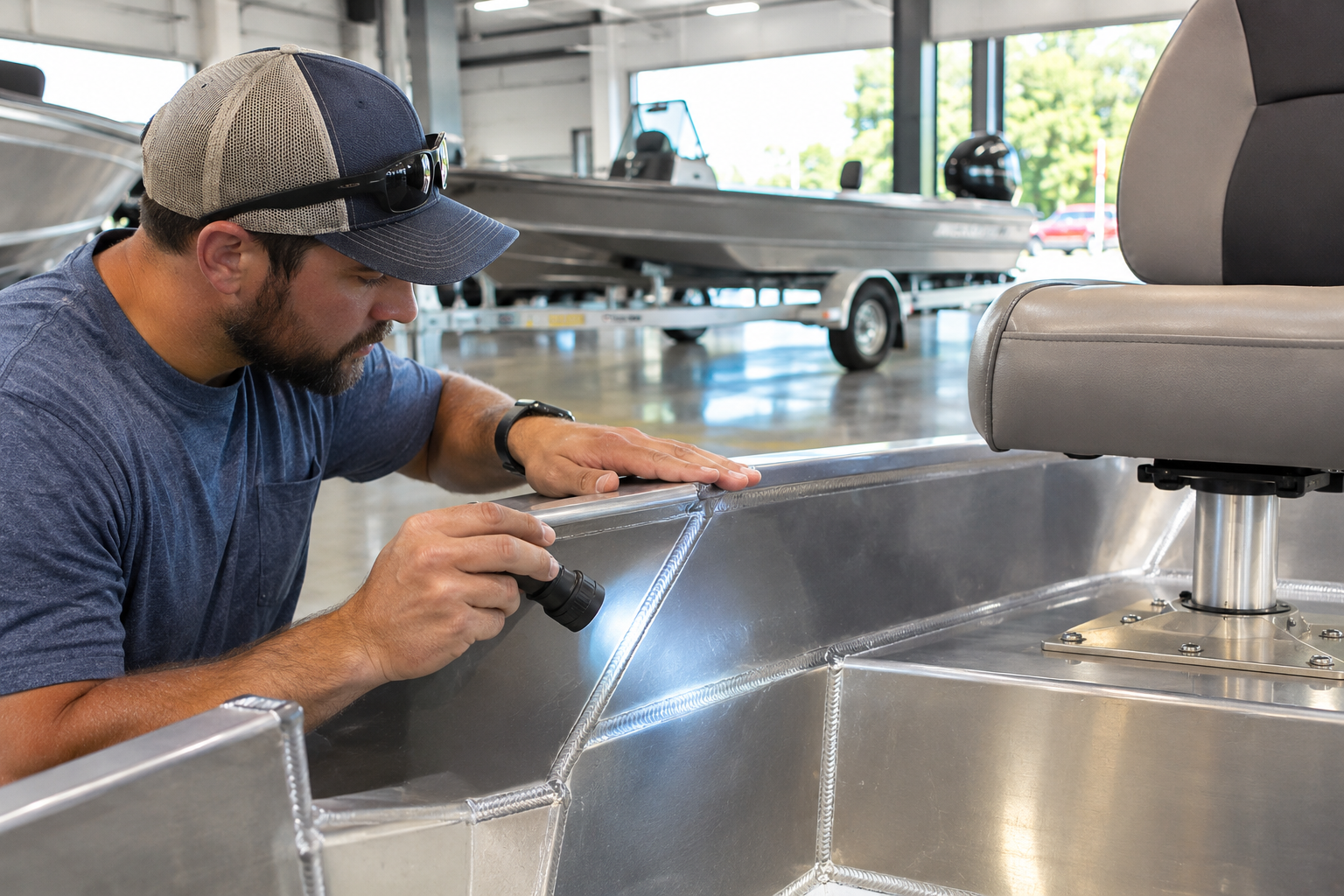
Skipping the hull inspection on a used boat. Cracked welds and leaking rivets are expensive to fix. Bring a flashlight and check the seams.
Forgetting where it will live. Boats need a dry, secure spot. Plan for storage before you buy, not after.
How can Bayou Outdoor help if you fish and camp?
Bayou Outdoor is a family-owned RV dealership in Bossier City, Louisiana, so we do not sell aluminum fishing boats. For the boat itself, visit a local boat dealer and use the checklist above. What we can help with is the trip around the boat.
Our site describes northwest Louisiana as part of Sportsman's Paradise, and many anglers camp near the water. Here is where we fit in:
RVs for fishing trips. Browse our travel trailers, fifth wheels, and toy haulers. A toy hauler's rear garage can hold rods, tackle, and other gear.
Towing questions. Use our towing guide to check what your vehicle can tow before you pick an RV. It is built for RVs and is for reference only, so confirm figures with your owner's manual.
Try before you buy. If you are new to camping, our RV rentals let you test the lifestyle first.
Financing and trade-ins. See our RV financing options or ask about a trade-in.
Service and parts. Our service department and parts store can keep your RV trip-ready.
Storage. Our site lists RV and boat storage if you need somewhere to keep your rig between trips.
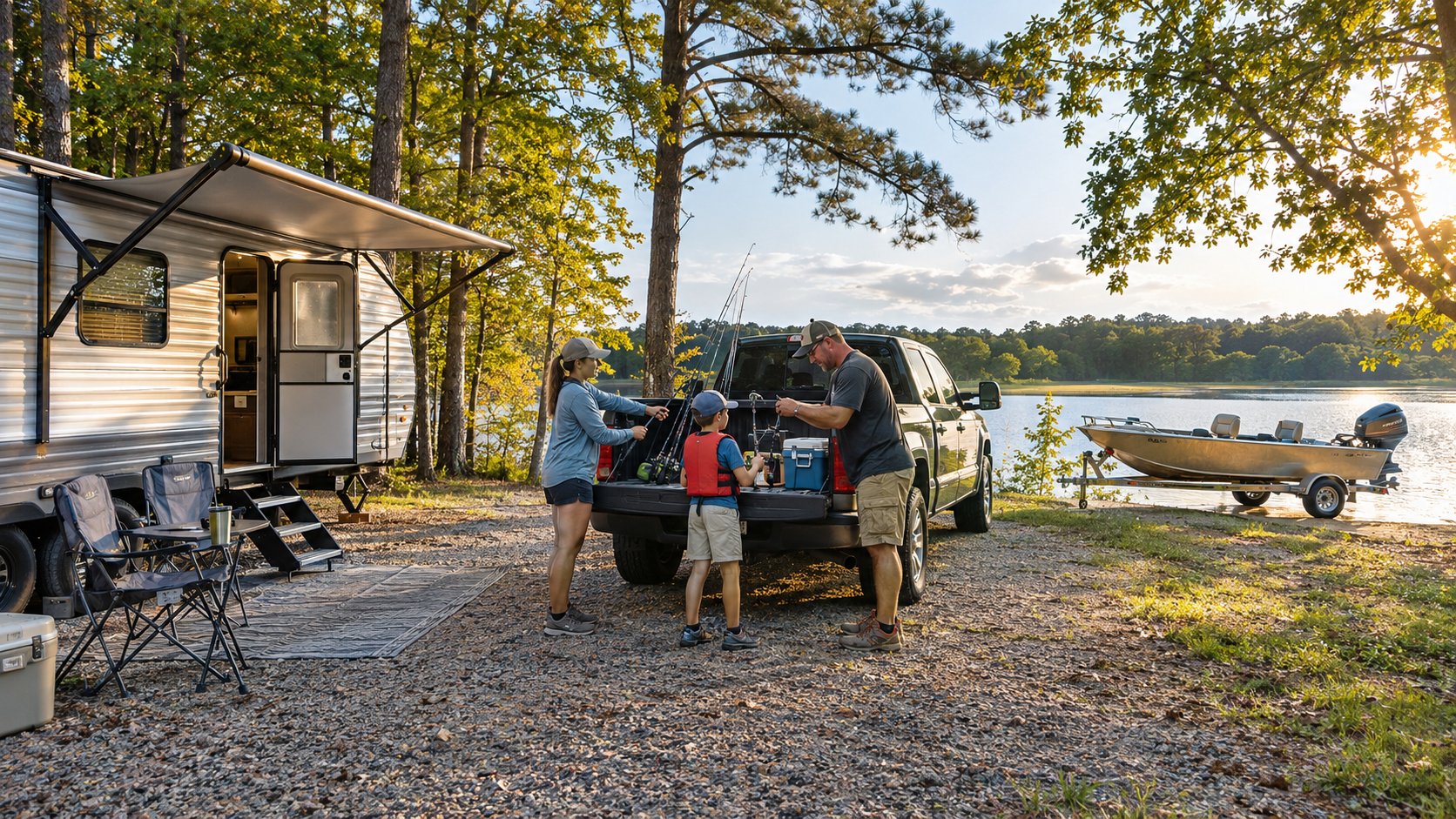
Call us at (318) 629-2628 or stop by 1800 Barksdale Blvd in Bossier City to talk with one of our RV specialists.
Frequently asked questions
Is an aluminum or fiberglass boat better for fishing?
Neither wins every time. Aluminum hulls are lighter and shrug off bumps against docks and stumps, which suits shallow, snag-prone water and easier towing. Fiberglass hulls generally give a smoother, quieter ride. Choose aluminum if you fish tight, shallow spots, and look at fiberglass if ride comfort in open water matters more.
Are welded aluminum boats better than riveted ones?
Welded seams generally hold up better against leaks, because rivets can loosen over time. Builders in Arkansas moved toward all-welded hulls for that reason. Still, many modern boats mix welding and rivets, so read the spec sheet for the exact model and ask the dealer how the hull is joined.
Can you use an aluminum fishing boat in saltwater?
Yes, with care. Some builders sell aluminum boats for coastal use, but salt speeds up corrosion. Rinse the hull, trailer, and motor after every trip, avoid copper-based bottom paint on aluminum, and ask the dealer how to isolate dissimilar metals. Check that the warranty covers saltwater use before you buy.
How much does an aluminum fishing boat cost?
Prices vary widely with size, motor, trailer, and age. The aluminum fishing boat category on Boats.com lists an average price near $26,000, but small used jon boats cost far less and large rigged models cost more. Compare complete packages, including motor and trailer.
How long does an aluminum fishing boat last?
A well-built and well-kept aluminum boat can last for many years. The head of SeaArk told Greenhead magazine that a good aluminum duck boat should last for years, if not a lifetime. Hull care, trailer condition, and avoiding corrosion matter more than the brand.
What size aluminum fishing boat should I buy?
Match the boat to your water, your passengers, and your tow vehicle. Boats.com lists aluminum fishing boats from roughly 10 to 24 feet. A smaller boat is easier to launch and store, and a larger one gives you more stability and room for gear and people.
Does Bayou Outdoor sell aluminum fishing boats?
No. Bayou Outdoor is an RV dealership in Bossier City, Louisiana. We can help with RVs for fishing trips, towing questions, financing, service, and parts. For an aluminum boat, visit a local boat dealer and use this guide to compare brands and hulls.
Final takeaway
The best aluminum fishing boat brand is the one that fits your water, your budget, and your tow vehicle. Shortlist a few brands, compare welded construction and written warranties, and put the boat on the water before you buy.
When the boat is sorted and you want a comfortable place to camp near the lake, contact Bayou Outdoor, call (318) 629-2628, or stop by 1800 Barksdale Blvd in Bossier City to see our new and used RVs.
